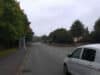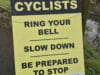

Former Strictly Come Dancing professional James Jordan has been criticised after posting on X that he had been “sat behind” a group of around 20 cyclists, calling them “complete bellends” for “taking up the whole road” and claiming they were “definitely doing it to make a statement”. He added that he kept his hand on the horn before “squeezing past”, ending the post with “THINK CARS”.
The Highway Code does not support the interpretation he gives. Rule 66 explicitly permits cyclists to ride two‑abreast and states that they may do so, particularly in larger groups or when it is safer. British Cycling and RoSPA both support this guidance, noting that two‑abreast riding shortens the length of a group and reduces the time a driver must spend on the opposite side of the road when overtaking. A group of 20 riders in single file can easily stretch beyond 100 metres; riding two‑abreast halves that distance. This is the safety rationale behind the rule, not an attempt to “make a statement”.
Cyclists are also entitled to use the centre of the lane when necessary. Rule 72 (“Road positioning”) states that cyclists may ride in the middle of the lane on narrow roads, at junctions, or where it would be unsafe for a driver to overtake. Police road‑safety units, including West Midlands Police during Operation Close Pass, have repeatedly explained that cyclists taking the lane is a protective measure to prevent unsafe overtakes.
Jordan’s description of keeping his hand on the horn is directly at odds with Rule 112, which states that the horn must only be used to warn of danger and must not be used aggressively or to express frustration. Prolonged horn use can startle riders and increase the risk of a collision.
Collision data also contradicts the idea that cyclists riding two‑abreast create danger. The Department for Transport’s STATS19 dataset, summarised annually in Reported Road Casualties Great Britain, shows that a significant proportion of serious cyclist injuries involving cars occur during overtaking manoeuvres. Police forces running close‑pass operations consistently identify unsafe overtakes as one of the most common causes of cyclist harm. The Near Miss Project (Aldred et al., 2016) found that close passes are among the most frequent and most frightening incidents reported by cyclists, and are strongly associated with multi‑vehicle collisions.
Several social‑media users responded directly to Jordan’s post. One wrote: “I’d love it if you received an NIP for your offence.” — Artist Cyclist (@ArtistCyclist)
Another added: “Hopefully one of them was running a camera and reports you squeezing past. It’ll cost you an Educational Course or 3 points and a fine if you already have points.” — Bikery (@Bikery1966)
Given Jordan’s own description of his driving, it is entirely reasonable to hope that at least one of the cyclists was running a camera and uploads the footage to Operation Snap, where police can assess whether a Notice of Intended Prosecution is appropriate.
The Highway Code’s 2022 update introduced a hierarchy of road users (Rules H1–H3), placing greater responsibility on those who can cause the most harm. Drivers are required to wait for a safe gap before overtaking, even if that means a short delay. Cyclists riding two‑abreast or taking the lane are doing so in line with national guidance and established safety practice.