Efforts by Leeds City Council’s highways teams to restore the city’s roads following the challenging weather have seen the pothole repair rate almost triple in the first three months of 2026.
The rate at which potholes were repaired went from 382 repairs in the first full week of January to a peak of 1,101 repairs in the first week of March, almost tripling the speed of repair. Ten full‑time pothole teams have been working extended hours to produce the significant increase in repairs, with 5,224 potholes across the city filled so far in 2026.
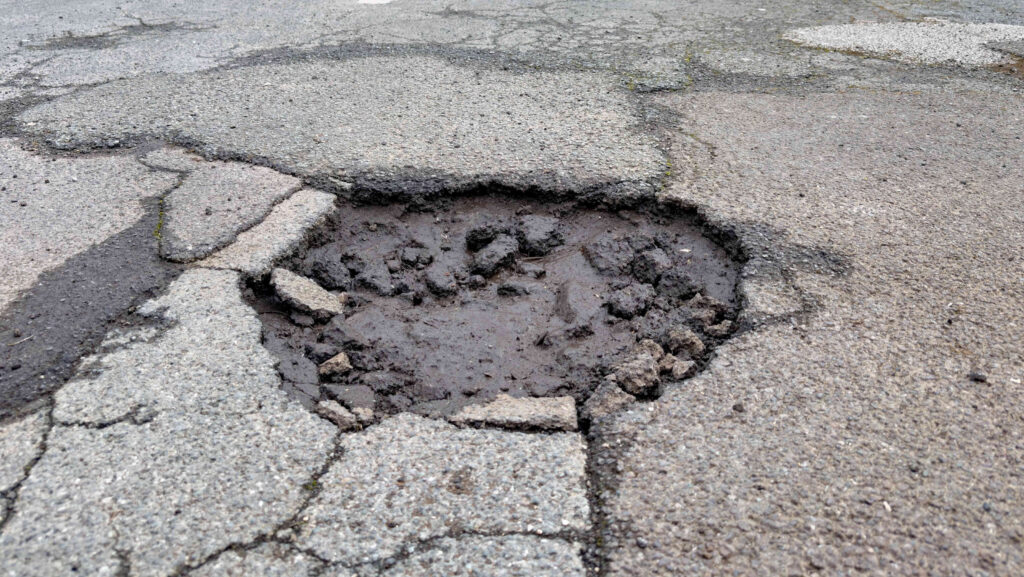
The rapid escalation in repairs comes at a time when potholes have been causing increasing disruption for all road users, but particularly for cyclists. Even relatively small potholes can destabilise a bicycle, forcing riders to swerve into traffic or risk sudden loss of control. Larger potholes can cause crashes, wheel damage and serious falls, especially when hidden under standing water. The recent surge in potholes has therefore had a direct impact on cycling safety and confidence across Leeds, making the accelerated repair programme especially significant for people who rely on bikes for commuting and local travel.
The increase in repair speed follows additional resources being made available and ongoing trials of three new pothole‑filling technologies, which have been taking place over the past year and continued into January and February. The council’s existing pothole repair strategy, supported by these trials, has seen an increase in the proportion of long‑lasting permanent repairs compared to short‑term temporary repairs. There has also been a push to improve the condition of whole road sections to reduce repeat pothole formation, alongside preventative work such as pre‑patching for micro asphalt and surface dressing.
Persistent rainfall in January and February left ground conditions heavily saturated and road surfaces far more vulnerable to sudden deterioration. For cyclists, this meant potholes appeared more quickly and were harder to detect, particularly in low light or when filled with water. To ease the increased workload and provide a more dynamic response, the council has been making better use of existing data systems and monitoring processes to track rainfall, river levels, pothole reports, backlog volumes and repair throughput.
This approach was further backed by councillors in this year’s Leeds City Council Budget, which committed £13 million of council funding and an additional £1 million in capital investment to pothole repairs. The extra investment for 2026/2027 will be used to accelerate the backlog of pothole repairs following the recent surge in reports, to secure and prioritise key strategic routes, and to resolve surface issues in complex locations. These improvements are expected to reduce the number of sudden hazards that cyclists currently face on many commuter corridors.
Moving into the next financial year, the council will also consider how to best utilise innovative pothole repair technologies such as Jet Patching, the JCB Pothole Pro and the Thermal Road Repair systems, which have already undergone testing in Leeds. In addition, a new climatic response framework will be implemented due to the increasing incidences of climate‑related pothole reporting, following reporting surges in two of the past three years.
Nationally, Leeds City Council’s highways team was recently recognised through securing a green rating in the Department for Transport’s most recent Local Road Maintenance Review, one of only 16 authorities to do so and one of only two in Yorkshire. The award reflects the council’s strong governance, investment and adherence to best practice in its highway maintenance activities.
Leeds City Council’s deputy leader and executive member for economy, transport and sustainable development, Councillor Jonathan Pryor, said: “The highways team’s response to the climatic challenges faced in the first months of the year has been outstanding, and we can be proud of the work they have done to keep the city moving safely.
“Moving forward, we have increased investment into our roads, and a robust strategy and processes are in place to not only meet future surges in demand, but also effectively tackle the backlog of pothole reports across the city.
“Key to these changes is the extra funding agreed by the council. This will not only provide security for major routes but also tackle some of the more complex repairs in hard-to-access areas and bring down the backlog of reported potholes. Adding some of the impressive new technologies into the mix of pothole repair methods we employ will also allow us to make more permanent repairs more quickly.
“While the work is not yet all done, these new figures prove we have an effective pothole strategy that is a strong basis to build on for the future.”