
A Facebook post by Newry City Runners has prompted debate about safety on the Newry Canal Way. Several of its claims, however, do not reflect the rules for towpaths in Northern Ireland.
The post, which described a collision between a cyclist and a runner, stated that “the Highway Code applies to the towpath” and that users must “keep left and overtake on the right”. In Northern Ireland, the Highway Code applies to roads and motor‑traffic environments, not to off‑road shared‑use paths such as the Newry Canal Way. Towpaths are not classified as roads, and no legislation extends Highway Code rules to them.
Towpaths in Northern Ireland are managed by the Department for Infrastructure (DfI), which issues a Towpath Code of Conduct. The Code describes towpaths as shared spaces used by walkers, runners, cyclists and dog walkers. It sets out expectations such as slowing down, giving space and showing courtesy, but it does not create legal obligations. The guidance is advisory rather than statutory, and there are no towpath‑specific byelaws in Northern Ireland.
The Facebook post also asserted that cyclists must use a bell or give a verbal warning. Northern Ireland law does not mandate the use of bells. Bicycles must be sold with a bell fitted, but riders are not legally required to keep or use one. The DfI’s towpath guidance encourages cyclists to warn others when passing, but this is a behavioural expectation rather than a legal requirement.
The Newry Canal Way is not subject to any canal or navigation byelaws. Northern Ireland does not have an equivalent to the British Waterways Byelaws 1965, which apply only in England and Wales. The Newry Canal is not a navigable waterway and is not managed by Waterways Ireland, meaning no statutory navigation or towpath byelaws apply. Behaviour on the route is governed by the DfI’s guidance and by general civil law, including the duty of care and negligence.
UK‑wide collision data provides additional context. Analysis by Cycling UK, using Department for Transport casualty data, shows that cyclists are involved in about two per cent of pedestrian deaths or serious injuries. Northern Ireland’s own casualty figures follow the same pattern, with pedestrian injuries involving cyclists remaining rare compared with those involving motor vehicles. The charity notes that while unsafe cycling should be addressed, the overall risk posed by cyclists to pedestrians is low in comparison with other modes of transport.
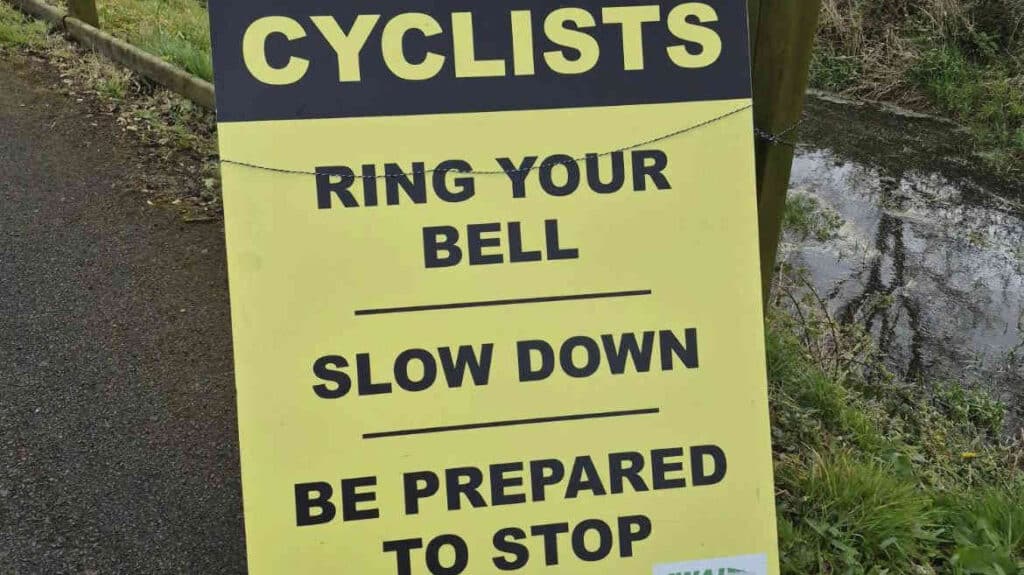
The incident described in the Facebook post involved a cyclist travelling at speed and failing to warn before overtaking. The DfI’s Towpath Code identifies this type of behaviour as a common cause of conflict on shared routes and advises cyclists to slow down, be prepared to stop and give space when passing. The Code also asks people on foot to remain predictable and keep dogs under close control.
The Newry Canal Way remains a shared‑use path where all users have equal access. Officials responsible for towpaths in Northern Ireland say safety depends on courtesy, awareness and predictable behaviour rather than the road‑traffic rules referenced in the Facebook post. Safety on shared paths, they add, relies on all users showing mutual respect.