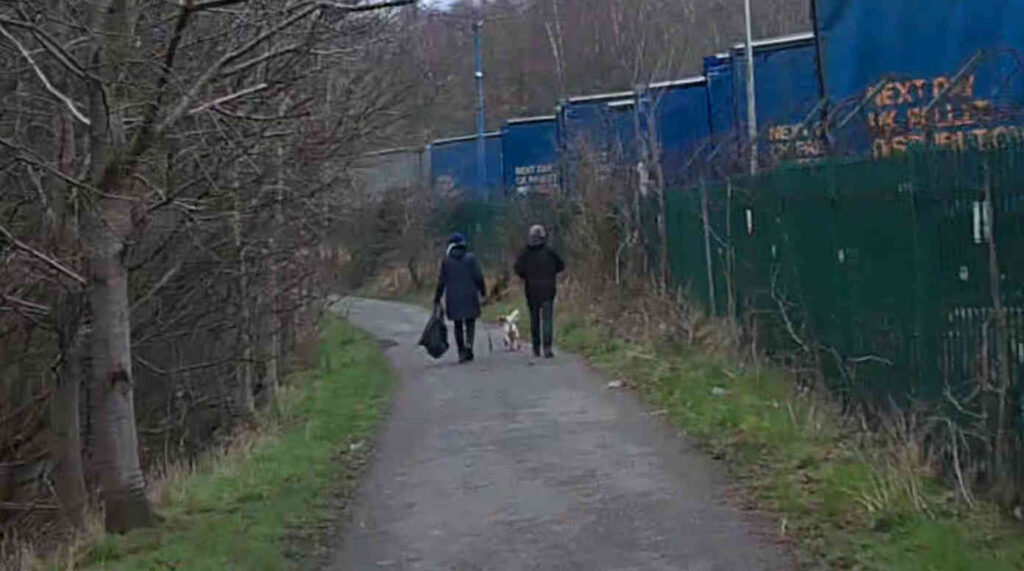
Every time a video of a cyclist and a pedestrian on a shared route appears online, the same comments flood in. People insist the cyclist should have slowed down. Others say cyclists “don’t own the path”. Some go further, claiming that all cyclists are selfish or that pedestrians have priority everywhere. These reactions are familiar, forceful and confidently delivered — but they do not reflect what the rules actually say.
The misunderstanding stems from mixing two completely different environments: shared‑use cycle tracks covered by the Highway Code and the off‑road National Cycle Network, which is governed by WalkWheelCycleTrust guidance. When you look at both sets of rules together, the picture is far more balanced than social media suggests.
The confusion usually starts with the Highway Code’s “Hierarchy of Road Users”. Many people assume this hierarchy gives pedestrians priority over cyclists. But Rule H1, when read in full, says something very different. It states that “those in charge of vehicles that can cause the greatest harm… bear the greatest responsibility to take care and reduce the danger they pose to others.” This is about responsibility, not priority. And H1 immediately adds: “None of this detracts from the responsibility of ALL road users, including pedestrians… to have regard for their own and other road users’ safety.” The Highway Code does not give pedestrians priority on shared paths. It gives everyone responsibility.
The next rule people often misinterpret is H2, which includes the line “cyclists should give way to pedestrians on shared use cycle tracks”. Online, this is taken to mean cyclists must stop whenever a pedestrian appears, or that pedestrians have a legal right to behave unpredictably. But “give way” has a precise meaning in the Highway Code: you must not force the other person to change speed or direction to avoid you. It does not mean the other person has priority. It does not mean you must stop. It does not mean you must ride at walking pace. It does not remove responsibility from pedestrians. It simply means cyclists must manage their approach so they do not impose risk on others.
The clearest rule of all is Rule 13, which is written for pedestrians. It explains how pedestrians should behave on routes shared with cyclists. It states that “cyclists should respect your safety”, but immediately adds that pedestrians “should also take care not to obstruct or endanger them.” It continues: “Always remain aware of your environment and avoid unnecessary distractions.” This is the part almost nobody quotes online. Even on a Highway Code shared‑use cycle track, pedestrians do not have priority. They must not obstruct cyclists. They must remain aware. They must avoid distractions. They have responsibilities too.
Yet on social media, the pattern is always the same. Someone posts a clip of a cyclist passing a pedestrian, and the comments fill with the same assumptions: “slow down”, “you should have stopped”, “cyclists are selfish”, “people dislike cyclists because of this”, “you don’t own the path”, “no, you should slow”. These reactions are not based on the rules. They are based on a cultural belief that pedestrians always come first, even when the Highway Code explicitly says otherwise. The idea that cyclists “own the path” is a projection — usually made by someone who believes pedestrians own it.
This misunderstanding becomes even more misplaced when people apply Highway Code assumptions to the National Cycle Network. Off‑road NCN routes are not highways. They are not pavements. They are not cycle tracks. They are not governed by the Highway Code at all. They are shared spaces governed by WalkWheelCycleTrust (formerly Sustrans), and their rules do not create priority for any group.
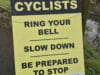
WalkWheelCycleTrust’s guidance is built around three principles: “Share the path”, “Respect all other users”, and “Enjoy the Network safely and responsibly.” These are not priority rules. They are shared‑space etiquette.
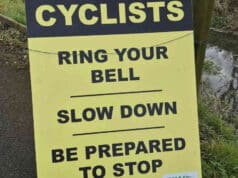
Their advice is clear: “Keep your distance… step aside and make room so that others can pass safely.” If pedestrians had priority, they would not be asked to step aside. They also say: “Be considerate of other users… be prepared to slow down.” This applies to everyone — walkers, runners, dog owners, wheelchair users, horse riders and cyclists. They add: “Be kind… give priority and be patient with people who may be moving more slowly.” This is courtesy, not legal priority. They remind users to be aware of others, including those who may be vulnerable. They tell dog walkers to keep dogs on short leads. They tell everyone to avoid unnecessary distractions. None of this gives pedestrians priority. None of it removes their responsibilities.
When you put both frameworks together — the Highway Code for shared paths and WalkWheelCycleTrust guidance for the NCN — the conclusion is unavoidable. The idea that pedestrians have priority on shared paths or the NCN appears nowhere in either rule set. It is not in H1, not in H2, not in Rule 13, and not in any NCN guidance. It is a social‑media invention, repeated so often that people assume it must be true.
But the rules themselves say something far more balanced: shared paths and the NCN rely on mutual responsibility, predictable behaviour, awareness and consideration from everyone who uses them. No one owns the path. No one has automatic priority. And the sooner we stop treating shared space as a hierarchy and start treating it as genuinely shared, the sooner the conflict will ease.