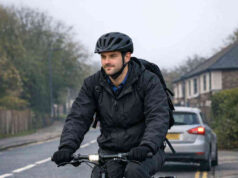
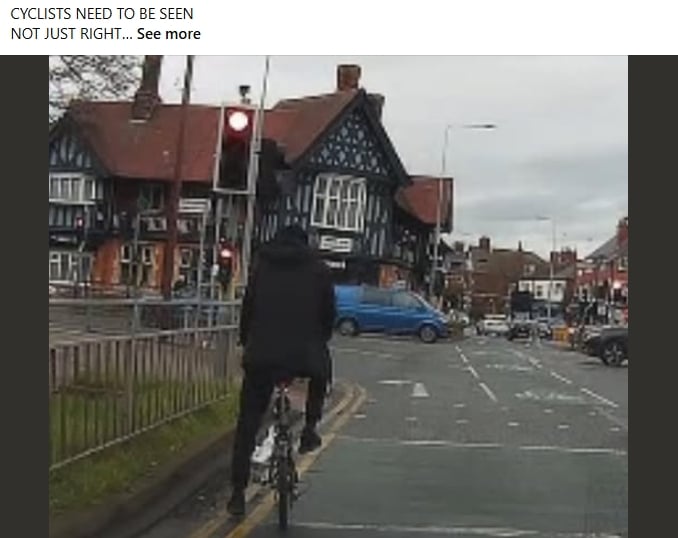
A social media post by driving instructor Sheena Ahmed, of Motorvation School of Motoring, urging cyclists to wear high‑visibility clothing, has prompted West Yorkshire Cycling to examine how her claims sit alongside the Highway Code and the available evidence on road safety. In the post, Ahmed tells cyclists that “being right is not the same as being safe”, that “too many cyclists are still riding around in dark clothing”, and that “being legally correct will not protect you if you are visually invisible”. She lists bright lights, hi‑viz clothing, reflective parts and “not being hidden in the gutter” as the things that “make you visible”, and suggests that drivers miss cyclists because “the brain filters what it cannot clearly see”.
Taken at face value, the post frames collisions primarily as a visibility problem and implies that the main solution lies with cyclists changing what they wear and how much they stand out. That sits uneasily with the Highway Code that Ahmed is supposed to be teaching to her learner drivers. The Code now sets out a clear hierarchy of road users: those who can cause the greatest harm—drivers of motor vehicles—bear the greatest responsibility to reduce the danger they pose. It explicitly recognises people walking, cycling and riding horses as vulnerable road users and places a higher duty on drivers to look properly, slow down, give priority where required and leave safe passing distances. The legal and moral burden is not on cyclists to compensate for driver inattention with clothing choices, but on drivers to control the risk they create.
Ahmed’s assertion that “being legally correct will not protect you if you are visually invisible” also deserves scrutiny. In many of the prosecutions and Notice of Intended Prosecution (NIP) cases arising from West Yorkshire’s roads, the offences are speeding, close passing, mobile‑phone use and careless or dangerous driving. These are behaviours entirely under the driver’s control and frequently recorded in broad daylight, often on camera, with cyclists plainly visible in ordinary clothing and with lights where required. In such cases, the problem is not that the cyclist was invisible, but that the driver chose to drive too fast, too close, or while distracted—precisely the behaviours the Highway Code and criminal law are designed to prevent.
The evidence on high‑visibility clothing itself is far less definitive than Ahmed’s post suggests. Reviews of the research by cycling organisations and academics have repeatedly found that while bright or reflective clothing can make a cyclist easier to detect in controlled experiments, this does not reliably translate into fewer real‑world collisions. A major UK case‑control study of cyclists involved in crashes found no reduction in collision risk for those wearing fluorescent or reflective clothing compared with those who were not. After adjusting for other factors, the study even found some indication of increased risk among hi‑viz users, possibly because of differences in behaviour or route choice, but in any event, not the protective effect often claimed for such clothing.
One of the most frequently cited studies in favour of hi‑viz is a Danish randomised trial in which thousands of cyclists were given yellow jackets and later reported fewer personal injury accidents. But that study relied on self‑reported incidents rather than independently verified crash data, and participants knew they were being given safety equipment, which introduces bias. When the authors adjusted for that bias, the apparent benefit reduced substantially. Even taken at its strongest, the study does not show that hi‑viz is a decisive or standalone factor in preventing collisions, nor does it outweigh the broader body of evidence pointing to driver behaviour, speed and road design as the dominant determinants of safety.
Ahmed writes that “drivers miss things not because they do not care, but because the brain filters what it cannot clearly see”, and urges cyclists to “make yourself obvious”. Cycling advocates do not dispute that good lights at night, and some reflective elements, can help in low‑light conditions. Front and rear lights are already a legal requirement after dark, and many riders choose additional reflective accessories. But they argue that presenting visibility as the central safety strategy risks normalising a narrative in which vulnerable road users must adapt their appearance to fit the limitations of driver attention, rather than insisting that drivers meet the standards already set out in the Highway Code.
That Code is explicit: drivers must take extra care to look out for cyclists, especially at junctions; must not cut across them when turning; must leave at least 1.5 metres when overtaking at speeds up to 30 mph and more at higher speeds; and must drive at a speed that allows them to stop in the distance they can see to be clear. None of those duties is conditional on what the cyclist is wearing. A driver who fails to see a cyclist in daylight because they were scanning only for larger vehicles, or who passes too close regardless of clothing, is not excused by the colour of the rider’s jacket.
Looking at Ahmed’s claims against this framework, a more precise picture emerges. Lights at night are essential and already mandated. Reflective elements on moving parts, such as pedals or ankles, can help drivers detect motion in the dark. Some cyclists feel more confident in hi‑viz and are free to choose it. But there is no strong, consistent evidence that hi‑viz clothing significantly reduces cyclist collisions, and there is clear legal guidance that the primary responsibility for avoiding harm lies with those in charge of motor vehicles.
For a driving instructor, the implications are significant. The core of the job is to teach new drivers the Highway Code, hazard perception and safe behaviour around vulnerable road users. When public messaging from within that profession suggests that cyclists must “make themselves obvious” or risk not being seen, it risks undermining the very hierarchy of responsibility that instructors are supposed to embed. West Yorkshire Cycling’s challenge to Ahmed’s post is not about denying that visibility can sometimes help, but about insisting that road safety messaging reflects both the evidence and the law: drivers must look properly, slow down, give space and accept the greater responsibility that comes with the greater power of a motor vehicle, regardless of whether the person on the bike is dressed in neon or navy.