Work is beginning on a major accessibility upgrade along the Rochdale Canal in Calderdale, with new bridge decks set to be installed across seven canal weirs between Todmorden and Luddendenfoot.
The project will make the full stretch of towpath fully accessible for the first time, improving safety and usability for people walking, wheeling and cycling, including those using National Cycle Network Route 68 between Hebden Bridge and Todmorden.
Calderdale Council is supporting the scheme in partnership with the Canal & River Trust, the nation’s largest canal charity. Around £400,000 of Active Travel England funding, secured through the West Yorkshire Combined Authority, will support the work.
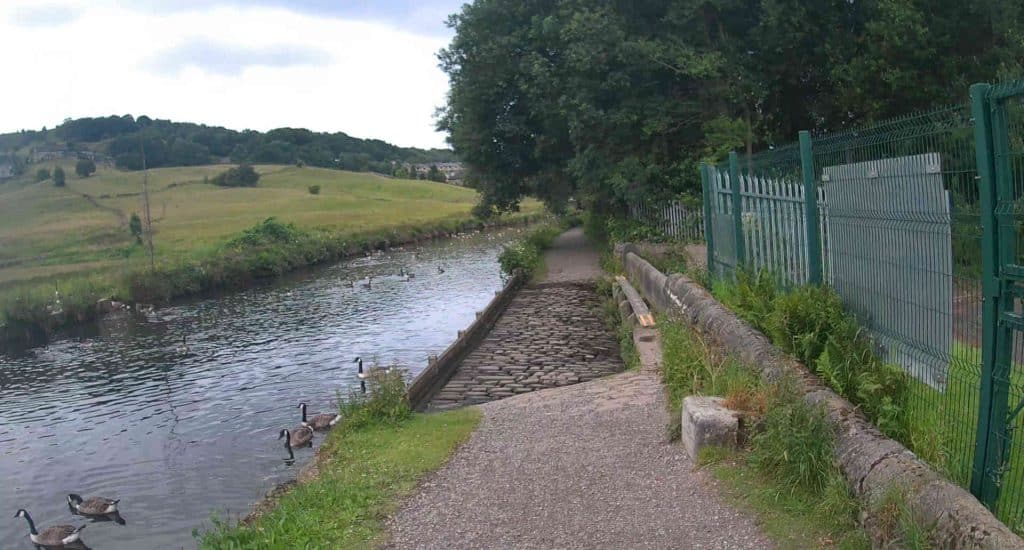
The new bridges, each around 1.5 metres wide, will be installed over the seven weirs to allow people to cross safely. Currently, the towpath dips at each weir and is surfaced with cobbles that become slippery when wet or during flooding. The improvements follow earlier engagement work in which people were asked to choose their preferred option for upgrades to Kilnhurst Weir.
Work will be delivered in phases, beginning with Luddendenfoot weir and Stubbing weir in Hebden Bridge. The second phase will include improvements at Kilnhurst, Woodhouse, Shaw Wood, Eastwood and Stoodley. Preparation work begins on Monday 16 March, including vegetation clearance and re‑laying cobbles to allow safe installation of the deck boards.
As part of the construction process, deck boards will be delivered by a Canal & River Trust workboat before being assembled on site. The project complements recent Combined Authority‑funded towpath improvements between Todmorden and Hebden Bridge, with further upgrades planned between Todmorden and Walsden through the Active Todmorden project, in partnership with the Todmorden Town Deal board.
Calderdale Council’s Cabinet Member for Climate Action and Housing, Cllr Scott Patient, said: “These works will transform the canal towpath between Todmorden and Luddendenfoot. Currently, when the weirs are in use, there is just a small wooden board for people to cross the weir without getting wet – clearly this isn’t suitable or safe, especially for those with prams or using wheelchairs.
“The installation of decking, along with other improvements along the canal, will allow the roughly 12 mile stretch of towpath from Luddendenfoot to Walsden to be fully accessible for the first time in its history, with step-free access opening up active travel opportunities for all.
“The plans are based on local feedback, including input from local disability groups, and reflect the heritage of the area, ensuring that any modifications are sympathetic to the existing surroundings.”
Deputy Chair of the West Yorkshire Combined Authority Transport Committee, Councillor Peter Carlill, said: “This project will make it easier for everybody to walk, wheel or cycle along this historic canal.
“Getting active improves our health and wellbeing, reduces carbon emissions and helps protect our environment.
“This is part of our mission to make West Yorkshire better-connected and accessible for all.”
Mark Robinson, enterprise manager at Canal & River Trust, said: “We know this canal towpath is well used by the local community. So, it’s fantastic to see this project to install bridges to the weirs under construction, providing better access along this stretch of Rochdale Canal towpath.
“The canal was vital to the Industrial Revolution. And, thanks to the hard work of the Trust and our volunteers, it is still navigated by boats today, as well as providing much-loved walking and cycling routes for the local community and a home for wildlife.
“As a charity, it’s so important that we work with other organisations to keep our historic canals open and alive. This project is a fantastic example of how we can work together to make canals more welcoming and attractive, part of ensuring they remain navigable for boats, accessible for local people and in support of wildlife.”