For years, the message from West Yorkshire’s leadership has been clear: “The future is active.” We’ve seen tens of millions of pounds of public money poured into concrete, asphalt, and segregated lanes. But as we head into 2026, a bizarre and frustrating paradox has emerged. While Leeds is building “gateways” to the city only to slam the door shut, Bradford is successfully weaving the National Cycle Network into the very fabric of its civic heart.
Leeds: The £30 Million “Cul-de-Sac”
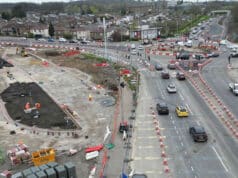
Leeds City Council has transformed its arterial roads with the award-winning Cycle Superhighway, the £7.2m City Centre Loop, and the Westgate Connector. These schemes were designed to safely funnel cyclists into the city.
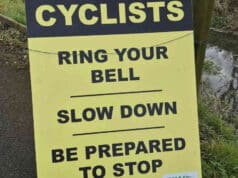
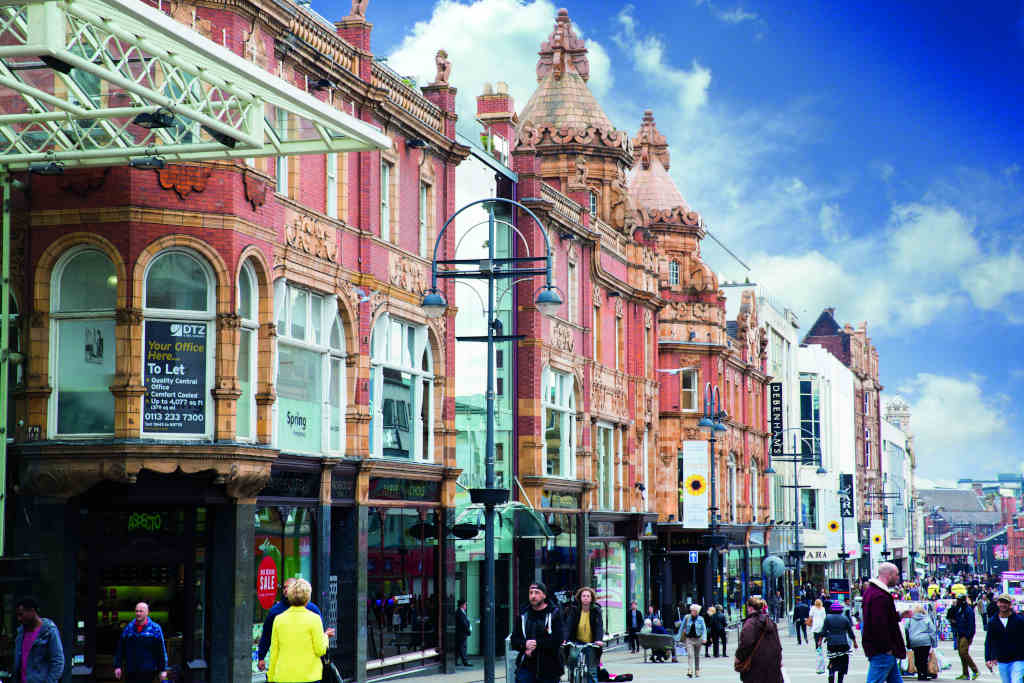
Yet, the council’s recent “Briggate Action Plan” feels like a massive U-turn. Under the new national Labour policy on anti-social behaviour, Leeds is proposing a Public Space Protection Order (PSPO) to enforce a “Dismount and Walk” zone across the city’s busiest shopping spine (10:00 am to 8:00 pm). As well as Briggate, this area includes Lands Lane, Commercial Street, Albion Place and lower Albion Street.
The Irony: You are encouraged to use multi-million-pound segregated lanes to reach the centre, only to face a potential £500 fine for riding the final 500 yards to your destination. For many, this isn’t just a minor detour—it’s a severance of the route.
Bradford: A Vision of Integration for Route 66
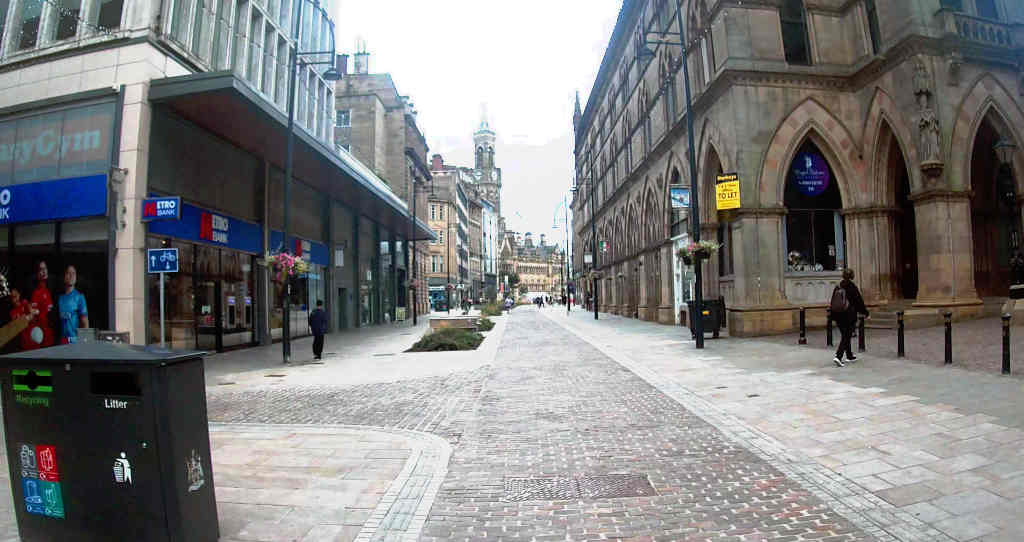
While Leeds creates barriers, Bradford is building a seamless network that respects national infrastructure. The city’s £45 million “Future Bradford” transformation hasn’t just built new lanes; it has preserved and enhanced National Cycle Network (NCN) Route 66.
Route 66 is the “trans-Pennine” backbone of West Yorkshire cycling, and Bradford’s new layout ensures this vital national route isn’t severed by pedestrianisation:
The Route 66 Nexus: Route 66 riders coming from the north (via the Canal Road Greenway) now find a high-quality, level-surface transition through the newly greened Hall Ings and Market Street. Bradford has chosen to keep this corridor open to cycles, recognising its status as a key piece of the National Cycle Network.
The Bradford West Connection: The newly completed West Bradford Cycle Superhighway Extension (Thornton Road) now feeds directly into this city-centre hub. This provides a continuous, safe, and legal path from the western suburbs all the way through the city heart to the Spen Valley Greenway.
Integration over Exclusion: Rather than “Dismount” signs, Bradford has used “filtered permeability”—removing cars but keeping the city open to those on two wheels.
Why Bradford is Winning:
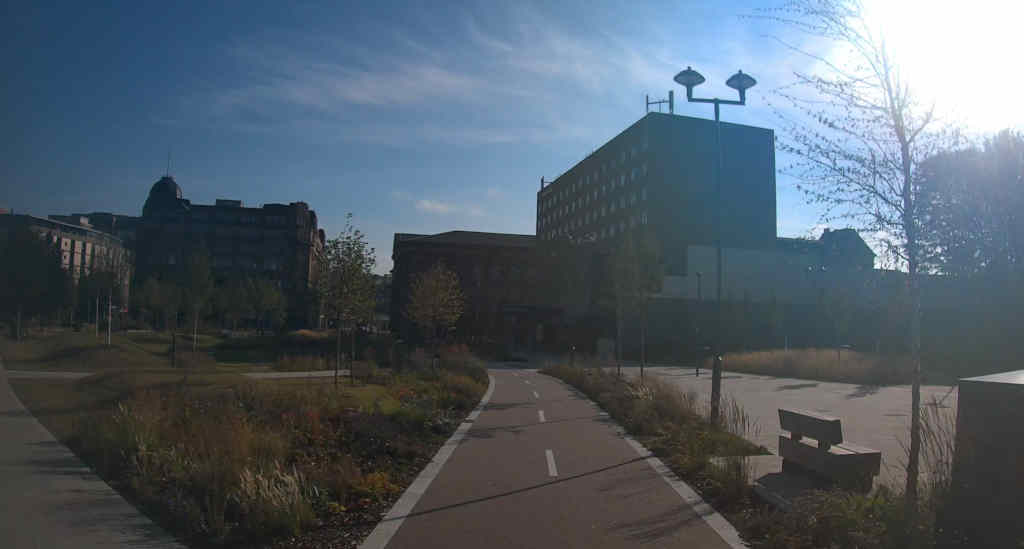
Network Continuity: Bradford understands that a cycle route is only as good as its weakest link. By allowing NCN Route 66 to flow through the centre, they maintain a functional transport corridor for the whole region.
Shared Space, Not Bans: Instead of criminalising cyclists with PSPOs, Bradford’s new 31,500m² of public realm is designed to naturally slow traffic, making the space safe for everyone without the need for heavy-handed fines.
National Network Respect: Bradford is treating Route 66 as a legitimate piece of the UK’s transport network, whereas the Leeds proposals treat it as a “nuisance” to be dismantled.
The Bottom Line
Leeds risks turning its expensive cycle lanes into “roads to nowhere.” By using police-style enforcement (PSPOs) to manage the city centre, they are sending a message that cyclists are a “nuisance” to be controlled rather than visitors to be welcomed.
If Leeds wants to see how to balance high footfall with active travel and national network connectivity, it doesn’t need to look at London or Amsterdam. It just needs to look at its neighbour. Bradford has proven that you don’t spend millions on cycling infrastructure—and the historic Route 66—only to ban the people using it.
Is it time for Leeds to drop the PSPO and follow Bradford’s lead?
Further information is available on Leeds City Council’s “Briggate Action” website