
The government has announced a projected £4.5 billion in cycling and walking investment over the next five years, with targets to deliver 5,000 new routes and 10,000 safer crossings by 2030. The government calls it the largest commitment to active travel in England to date.
The Department for Transport published its third cycling and walking investment strategy (CWIS3) on 12 June 2026, setting a national target for 55% of short journeys in towns and cities to be walked or cycled by 2035. A separate target aims for 60% of children aged 5 to 16 to travel actively to school by the same date. The strategy also aligns with the government’s road safety strategy, which targets a 65% reduction in people killed or seriously injured on roads by 2035, and 70% for children.
The £4.5 billion comes from two sources. Active Travel England’s own budget accounts for £1,107 million. The remaining £3,448 million comes from wider funding streams across the Department for Transport and other government departments, including city region sustainable transport settlements, highways maintenance, the Pride in Place programme, and National Highways. If there is a material change to the financial resources available, the strategy requires the Secretary of State to formally vary it under the Infrastructure Act 2015.
The strategy acknowledges that the previous government cut £200 million from the national active travel budget, describing this as having decimated local authority capacity to plan and deliver active travel schemes.
West Yorkshire Mayor Tracy Brabin is one of 12 regional mayors who signed a joint agreement with the Department for Transport and Active Travel England in July 2025, pledging to deliver 3,500 miles of safer routes linking schools, neighbourhoods, high streets and transport hubs across their combined areas. The West Yorkshire Combined Authority is rated “Top Tier” by Active Travel England for active travel capability, and received £17.07 million in active travel funding in February 2025. The Combined Authority has delivered 149 kilometres of new or improved walking, wheeling and cycling routes to date, and has Local Cycling and Walking Infrastructure Plans in place for all five West Yorkshire districts: Leeds, Bradford, Calderdale, Kirklees and Wakefield.
The first five years of the strategy prioritise safe routes to school. The government cites figures showing that in 2024, 10% of school journeys under a mile were made by car, rising to 51% for journeys of between one and two miles. Active Travel England is providing £135 million in revenue funding over the strategy period for this. The money will train and support children to walk, wheel and cycle to school, help schools develop travel plans, and support people to start or return to cycling.
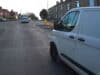
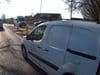
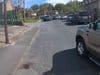
The government will regulate in 2026 to make unnecessary obstruction of the pavement civilly enforceable. This gives uniformed civil enforcement officers the power to act on the most antisocial cases of pavement parking. Local transport authorities will receive new devolved powers to prohibit pavement parking entirely in their areas. The Traffic Signs Regulations and General Directions will be updated by 2028 to introduce new, simpler zebra crossings for use on side roads. A new £10 million Streets Innovation Fund will support trials of new road safety and active travel measures. The Manual for Streets will be updated to put pedestrians and cyclists first. The government will also publish new guidance on setting local speed limits and review powered mobility devices.
The strategy commits to establishing the basis for a national active travel network by 2030, bringing together existing, planned and pipeline schemes into a single digital platform. By 2030, people will be able to find walking and cycling routes through standard route mapping websites and apps. The government will also develop a national wayfinding system, with local pilots launching this year and updated signage standards rolled out as schemes are built or refreshed.
Active Travel England will use new statutory planning powers to ensure new housing and development includes high-quality active travel provision from the outset. The strategy also commits to delivering an uninterrupted active travel route between London and Birmingham as part of the HS2 legacy, and to improving cycle parking and connectivity at rail stations.
On health, the government estimates the programme would free up 1.7 million GP appointments per year, result in 4.4 million fewer sick days, and deliver 45,000 years of life gained through reduced risk of premature death. It projects 5.3 million more people being physically active through active travel by 2035, with 2.2 billion more short walking stages and 600 million more short cycling stages in towns and cities. If households give up a second car in favour of active short trips, the government estimates an average saving of £1,700 per year. The strategy projects 700 million fewer vehicle miles as a result of meeting its 2035 target.
Transport Secretary Heidi Alexander said: “Too many people would like to walk, wheel or cycle more often but don’t feel they have safe and convenient options to do so. Our new cycling and walking investment strategy sets out how we will change that, with ambitious targets, record levels of investment and a clear plan to make active travel a practical choice for millions more journeys.”
National Active Travel Commissioner Chris Boardman said: “Our Worth Every Step delivery plan will change that. And it starts with where we’ll get the biggest impact: a more active school run and simple zebra crossings to transform local trips. It’s time to make the cheapest and healthiest way to travel, the easiest way to travel.” The strategy was published alongside that delivery plan, “Worth Every Step”, which sets out how the investment will be delivered between now and 2030.
Under the strategy, funding for mayoral strategic authorities is now devolved as part of wider local transport settlements. This gives local leaders flexibility over how active travel funding is spent. It also means local areas can redirect active travel funds to other transport priorities if they choose. How much of the national investment reaches West Yorkshire cycling infrastructure will depend on how the Combined Authority allocates its share.