Leeds City Council has announced that cyclists and e-bike riders must walk their machines through Briggate and the surrounding pedestrianised shopping area between 10.30 am and 8 pm every day, once new regulations take effect before the end of 2026. The council says the change follows overwhelming public support in its recent consultation. 2,100 people responded. Leeds has a population of about 800,000.
Of those who responded, 87% supported walking cycles and e-bikes through the area during pedestrianised hours. Support among respondents was strong. Briggate alone records weekly footfall exceeding 250,000, measured by specialist cameras. The 2,100 respondents represent fewer than one in 100 of Briggate’s weekly users.
Whether that counts as overwhelming public support is debatable. Statistically, it is a self-selected sample from a small fraction of those affected.
In 2025, 234 pedestrians were killed or seriously injured in collisions with cyclists across Great Britain — a record high. Two were killed. 232 suffered serious injuries.
Serious injury in the Department for Transport’s STATS19 classification means injuries requiring hospital treatment: broken bones, internal injuries, severe lacerations, concussion, and extended hospital stays. These are not minor incidents.
That figure is a record, and the upward trend is real. It is not a trivial number. It needs to be set against the full picture of pedestrian danger on British roads.
In 2025, 372 pedestrians were killed in Great Britain in road collisions. The overwhelming majority were killed by motor vehicles. Cyclists were involved in two pedestrian deaths — less than 1% of all pedestrian fatalities. Total pedestrian casualties from all sources reached 19,978, of which 718 involved cyclists across all severity levels.
234 pedestrian KSI from cyclists across all of Great Britain in a record year. Fewer than one per local authority area.
Motor vehicles account for the vast majority of pedestrian deaths and serious injuries on British roads. A record number of pedestrians seriously injured in collisions with cyclists is a genuine road safety concern, and it is right to address it. It does not frame cycling as the primary threat to pedestrian safety.
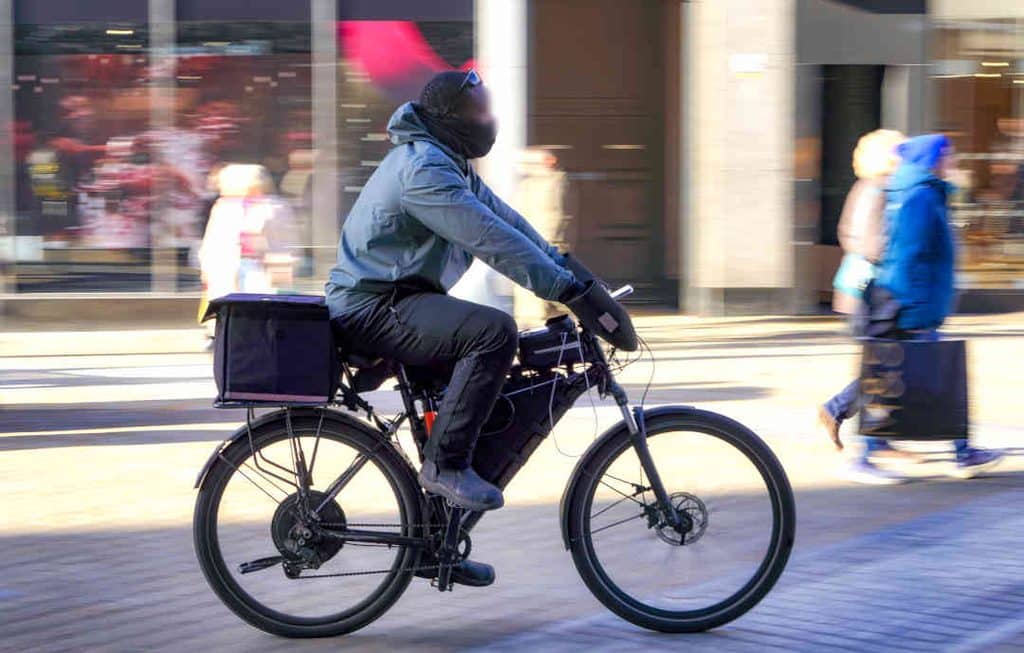
The council’s press release identifies the specific concern: delivery machines used by commercial riders, some of which it says can travel at up to 45mph.
A machine capable of 45mph is not a legally compliant Electrically Assisted Pedal Cycle. Under the Electrically Assisted Pedal Cycles Regulations 1983, as amended, a legal e-bike has a maximum continuous motor output of 250W and must cut out its electrical assistance at 15.5mph. A machine that exceeds those thresholds is an electric motorcycle under section 185 of the Road Traffic Act 1988, requiring registration, insurance, and a driving licence. Riding one without those in a public place is already illegal, regardless of any new regulations Leeds City Council introduces.
The regulation bans all cycling through the area during pedestrianised hours — legal cyclists at walking pace and illegal delivery machines at 45mph alike. The press release builds its public-safety case on the dangerous machines. The regulation applies to everyone on a cycle. The problem identified and the solution applied are not the same thing.
The council has not published injury data specific to Briggate. The national data tells us why. Nationally, fewer than one cyclist-pedestrian KSI occurs per local authority area each year. If Briggate had a significant number of recorded injuries, the figures would show it. They do not. And if the problem were as pressing as the press release suggests, more than 2,100 of Leeds’s 800,000 residents would have said so.
Anyone who contravenes the new regulations faces a £100 fixed penalty notice. The council says it will enforce the rules proportionately at first.
The 2025 record of 234 pedestrian KSI from cyclists nationally is the most honest statistical foundation for this discussion. It shows a real and worsening problem. It also shows that 232 of those 234 were serious injuries rather than deaths, that cyclists account for less than 1% of pedestrian fatalities, and that the machines most associated with dangerous behaviour in pedestrianised areas are already illegal under existing law.
Leeds City Council’s action addresses a genuine problem. The press release framing does not reflect the full picture.