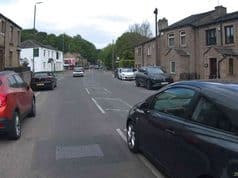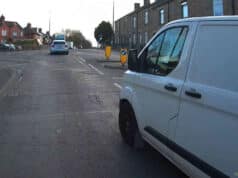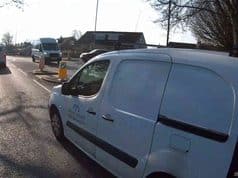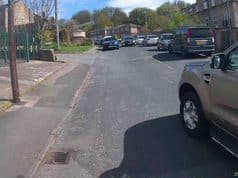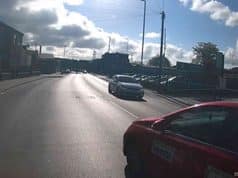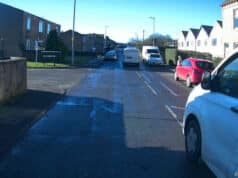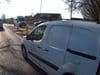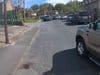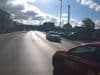
On Wednesday, 23rd October 2024, a white Nissan E-NV200 van registered DV20 UWK overtook a cyclist on the narrow Green Lane in Wyke and cut back across the cyclist’s path before completing the pass. The cyclist held primary position in the centre of the lane at the ‘SLOW’ road marking near Vicarage Close, with an oncoming vehicle already visible ahead. The cyclist’s position was steady throughout.
The footage was submitted to West Yorkshire Police via the Safer Roads Media Submission Portal on 23rd October 2024, and an email acknowledgement with a unique reference number confirmed receipt. On Monday, 28th October 2024, West Yorkshire Police confirmed enquiries were underway to trace the driver. Potential outcomes included an educational course, a conditional offer of a fixed penalty, or a court hearing.
The police send a Notice of Intended Prosecution, or NIP, to the registered keeper within 14 days of the offence. The NIP does not guarantee prosecution; it is a formal notification that prosecution may follow. The keeper has 28 days to provide the driver’s name and address. Supplying false details can amount to perverting the course of justice, carrying the risk of a prison sentence or a substantial fine. Ignoring the NIP is also an offence, leading to six penalty points and a fine of up to £1,000.
Operation Snap data for October to December 2024 confirmed the driver was processed for offence RT88575: ‘Driving a mechanically propelled vehicle on a road or public place without due care and attention’, under Section 3 of the Road Traffic Act 1988. Section 3 defines careless driving as conduct that falls below the normal standard expected on the road.
Highway Code Rule 163 permits overtaking only when safe and lawful. Drivers must give cyclists at least the same clearance as a car. Drivers should leave at least 1.5 metres at speeds up to 30mph, increasing this distance at higher speeds and in adverse weather. Where these clearances cannot be achieved, drivers should remain behind the cyclist.
The driver received a conditional offer of a fixed penalty. This allows a driver to settle a minor motoring offence without going to court by accepting a set fine and a fixed number of penalty points. If the driver rejects the offer, the case moves to the magistrates’ court, where the penalties can be higher. The police cannot make the offer if accepting it would push the driver to 12 points. Reaching 12 points triggers a driving ban. The police normally send drivers with a high number of existing points straight to court.
The driver accepted the conditional offer and received three points on their licence and a £100 fine. The points remain on the licence for four years, and the endorsement increases insurance premiums.